
Why Animals Love Your Roof (And How to Stop Them)
It usually starts with a sound. A little scratching above the bedroom ceiling around dawn, or a thump late at night that you blame on the house “settling.” Houses settle. They don’t usually scurry.
If you’ve started hearing things in the attic as the weather cools down, you’re probably not imagining it. Fall is when a lot of animals go looking for a warm, dry place to ride out the winter, and from their point of view your roof is prime real estate: high off the ground, sheltered from wind and rain, and sitting right on top of a heated house. So the real question isn’t why animals love your roof. It’s how they got in, and what it takes to make sure they don’t come back next year.
Why Your Roof Looks Like a Five-Star Hotel to Wildlife
Animals aren’t picky about architecture. They want shelter, warmth and a safe place away from predators, and an attic checks all three boxes. Insulation is soft enough to nest in, the space stays warmer than the outdoors because heat rises from the rooms below, and very few predators are going to climb two stories to bother anyone up there.
Timing plays a big part too. In New Jersey, the first cold nights of fall push animals to find winter shelter, and late winter into spring is when many of them look for a safe spot to raise their young. That’s why homeowners tend to notice attic activity at those two points in the year, and why fall is the right time to check your roofline before the cold really sets in.
The Usual Suspects on New Jersey Roofs
Squirrels
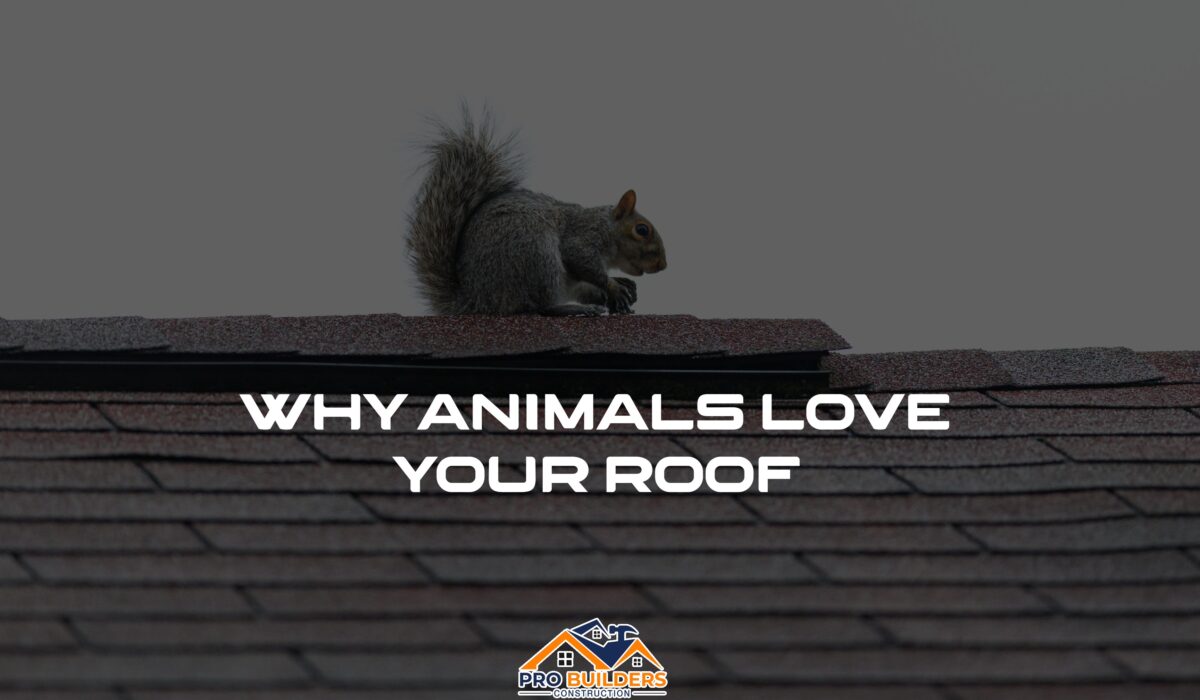
Squirrels are the most common roof visitors in many neighborhoods, and they’re surprisingly destructive for something so cute. Their front teeth never stop growing, so they chew constantly, and soft or weathered wood along the roof edge is easy work. Once inside, they shred insulation for nesting material and have a habit of gnawing on whatever is nearby, including electrical wiring, which is the last thing you want happening in a dark attic full of insulation.
Raccoons
Raccoons are bigger, stronger and far less subtle. They can pull up loose shingles, tear open vent covers and break through weakened soffits. If a raccoon has moved in, you’ll usually know: the noise is heavier, and the mess they leave behind, from droppings to flattened and soiled insulation, turns into a real cleanup job. Raccoons can also carry rabies, so this is not a “chase it out with a broom” situation.
Bats
Bats don’t need much of an opening, which is exactly what makes them tricky. They slip in through small gaps along the roofline, around flashing and near vents. They don’t chew their way in like squirrels, but their droppings build up over time and they can carry rabies too. Bats are also protected under New Jersey law, and there are times of year, from late spring through summer, when they shouldn’t be excluded at all because young bats could end up trapped inside. Getting bats out of a building is a job for a licensed wildlife professional who knows the rules.
Birds
Birds love gutters, exhaust vents and any gap under the roof edge that looks like a ready-made nesting shelf. Nests can block airflow through vents, clog gutters and hold moisture right against the wood of your roof edge, which slowly invites rot and, eventually, the animals listed above.
How Animals Get Into Your Attic
Animals rarely create an entrance out of nothing. Most of the time they find a weak spot that already exists and make it bigger.
The roof edge is the most common target. When gutters overflow season after season, water soaks into the boards behind them, and rotting fascia and soffit boards become soft enough for a squirrel to chew through without much effort. A gap that starts out the size of a finger doesn’t stay that size for long.
Vents are the next big one. Roof vents, gable vents and ridge vents let air move through the attic, and that airflow plays a big part in keeping heat and moisture under control in your attic. But a vent with a cracked cover or a missing screen is basically an open door with a welcome mat.
Other common entry points include gaps around the chimney, damaged or missing flashing, loose or missing shingles, and an uncapped chimney flue, which animals treat as a private elevator straight into your home.
Signs You Have Uninvited Guests
Noise is the obvious clue, especially scratching or running in the early morning and around dusk, when many animals are most active. But it’s not the only one, and some of the best evidence is outside.
Walk around the house and look up. Chewed wood along the roof edge, holes in the soffits, torn or bent vent covers, shingles that look lifted or pulled, and droppings on the roof or near the foundation all point to activity. Inside, a stale or musty smell coming from the attic can mean nesting material, droppings or moisture getting in through an opening. And if you go up and find insulation that’s been flattened, tunneled or dragged around, something has clearly made itself comfortable.
How to Keep Animals Off Your Roof and Out of Your Attic
Get the animals out first
Order matters here. If you seal an opening while an animal is still inside, you’ve trapped it, and a trapped animal will either chew a brand new hole somewhere else or die in your attic. Neither outcome is pleasant. A licensed wildlife removal professional can confirm what’s living up there and get it out humanely, which matters even more in spring, when there may be babies involved.
Then repair the way they got in
Once the attic is empty, the lasting fix is repairing the entry points, not just stuffing them. That can mean replacing rotted fascia and soffit boards, securing or replacing damaged vent covers, repairing flashing, replacing loose or missing shingles and sealing gaps around the chimney. A properly fitted chimney cap keeps animals and debris out of the flue. Patching a hole with whatever is lying around the garage rarely holds up against a determined squirrel with nothing but free time.
Make your roof less inviting
Trim back tree branches that hang over the roof, since they work as a bridge for squirrels and raccoons. Keep gutters clean so they don’t turn into nesting spots or soak the wood behind them. And take a slow look at your roofline every fall and spring. It only takes a few minutes, and it’s the easiest way to catch a small opening before it becomes somebody’s front door.
Final Thoughts
Animals don’t move into attics to make your life difficult. They move in because something gave them an opening, and as long as that opening is there, the next tenant will find it. Removing the animal solves this year’s problem; repairing the roof is what stops it from becoming an annual tradition.
If you’ve had animals in the attic, or you’ve noticed chewed wood, damaged vents or loose shingles along your roofline, Pro Builders Construction can repair the damaged areas and close up the gaps so your roof goes back to protecting your home instead of hosting guests. Call us at 201-953-1557 or request a free estimate, and we’ll take a look before winter does any more damage.