

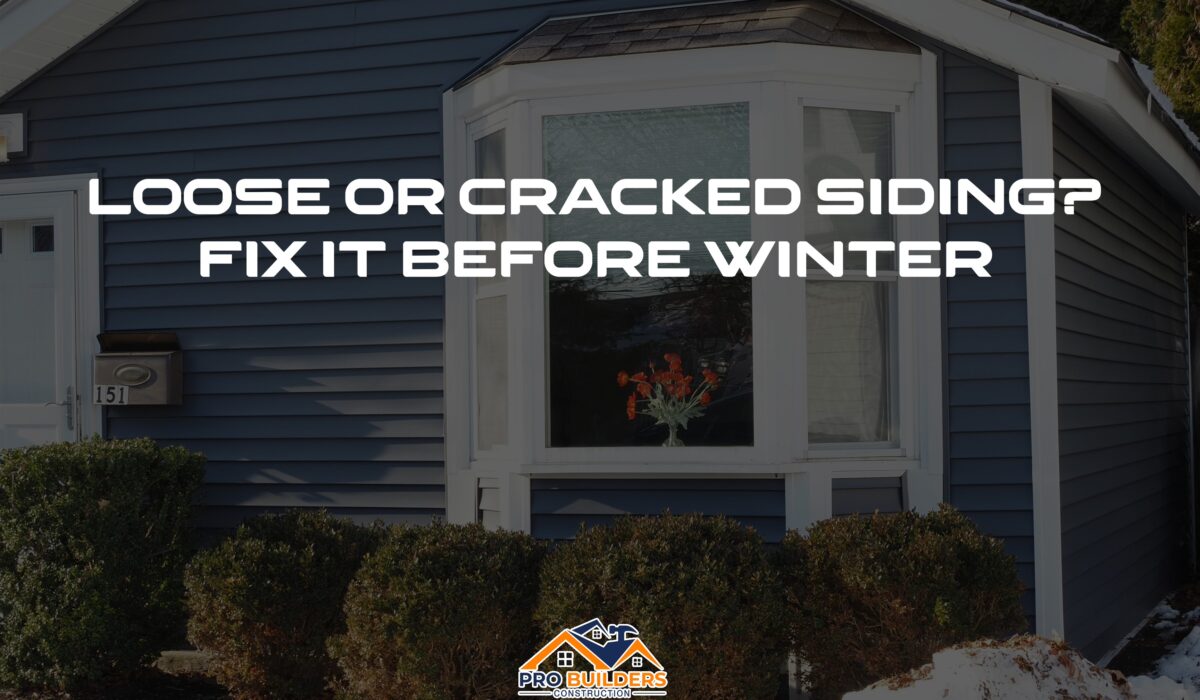
Most homeowners notice a loose siding panel the same way: a strange slapping or rattling sound on a windy night, followed by a trip outside with a flashlight to figure out which part of the house is trying to leave. A cracked panel is even easier to ignore. It’s one small line on one wall, the house still looks fine from the street, and there’s always something more urgent to deal with.
The problem is timing. In New Jersey, late fall is the last comfortable window to repair loose or cracked siding before winter wind, snow and freezing temperatures turn a small gap into a much bigger job. Here’s why that gap matters, what to look for, and when a quick repair is enough.
Why Small Siding Damage Gets Worse in Winter
Siding has one main job: keeping water away from the wall behind it. A panel can look perfectly decorative and still fail at that job if it has pulled loose or split open. Winter just happens to be the season that tests it hardest.
Wind gets under loose panels
Vinyl siding panels lock into each other along their edges. Once one panel unhooks or its nails loosen, wind can slip underneath and work it back and forth. Every gust adds a little more leverage, and a panel that was slightly loose in October can be lying in your yard after the first strong winter storm. When one piece goes, the panels around it lose their support too, so the damage tends to spread rather than stay put.
Cold makes vinyl more brittle
Vinyl becomes stiffer and less forgiving as temperatures drop. A panel that would flex in summer can crack in January when it’s hit by a stray hockey puck, a falling icicle, a ladder or a chunk of snow thrown by a snowblower. If a panel is already cracked, cold weather makes it easier for that crack to grow.
Water and ice do the rest
A crack or gap lets rain and melting snow reach the layer behind the siding. A little moisture there might dry out in summer, but winter is wet, cold and slow to dry. Water that gets into cracks in wood or fiber cement siding can freeze, expand and widen the opening each time temperatures swing above and below freezing. Behind the panels, trapped moisture can soak the sheathing, encourage mold and eventually rot the wood that holds your wall together. At that point you’re no longer paying for a panel. You’re paying for whatever the panel was supposed to protect.
Signs Your Siding Needs Attention Now
Walk around the house on a dry afternoon and look at each wall from a few feet away, then up close. You’re looking for panels that sit crooked, bulge outward or move when you press on them gently. Cracks, holes and chipped corners are easy to spot on lighter colors; on darker siding, look for thin shadow lines. Pay extra attention to areas around windows, doors, outdoor faucets and corners, where trim and siding meet and gaps form most often.
Inside the house, the clues are less obvious but just as useful. Peeling paint or wallpaper on an exterior wall, a musty smell in one room, or a draft near an outlet can all point to moisture or air getting through the siding. If you see staining on the soffit or the siding just below your gutters, check the gutters too, because water spilling over clogged gutters often ends up running behind the top rows of siding.
Repair or Replace? It Depends on the Damage
When a repair makes sense
If the damage is limited to a few loose or cracked panels and the wall behind them is dry and solid, a targeted repair is usually the right call. Loose vinyl panels can often be re-hung and re-secured, and damaged ones can be swapped out without removing the whole wall. Gaps around trim and corners can be resealed. This kind of fix is quick and affordable, and it’s exactly what you want to get done before the weather turns.
One honest caveat: new panels don’t always match older ones perfectly, especially if the existing siding has faded in the sun. A good contractor will tell you upfront how close the match will be and where the new piece will be least noticeable.
When it’s time to think bigger
If panels are cracking all over the house, coming loose on several walls, or the wall underneath is soft or stained, patching one spot at a time becomes a losing game. Widespread damage, warping and constant repairs are among the clearer signs your siding is ready for an upgrade. If you do end up replacing it, it’s worth comparing siding materials and how they hold up before you decide, since each one handles impact, moisture and maintenance a little differently.
Why Late Fall Is the Right Time to Fix It
Siding repair is easier in mild weather. Vinyl is easier to handle when it isn’t frozen stiff, and most caulks and sealants list a minimum application temperature on the label for a reason. Waiting until a panel actually blows off usually means scheduling a repair during the busiest and coldest part of the season, often with a tarp or temporary patch in the meantime.
There’s also the simple math of it. A loose panel today is one panel. A loose panel after three months of wind, snow and freeze-thaw cycles may be several panels, wet insulation and a section of sheathing that needs to come out.
Can You Fix Siding Yourself?
Some homeowners are comfortable snapping a loose vinyl panel back into place on the first floor, and that’s fine if it locks in cleanly and stays put. The trouble starts when the damage is higher up, when the panel won’t hold, or when you pull it back and find damp or dark wood underneath. Ladders, cold hands and brittle vinyl are a bad combination in November. And if moisture has already gotten in, snapping the panel back only hides the problem until spring.
Final Thoughts
Loose or cracked siding is rarely an emergency on the day you notice it, but winter has a way of making it one. Fixing a few panels and sealing the gaps now is far cheaper than repairing a wet, rotting wall after the snow melts. If you’ve spotted siding that rattles, bulges or has started to crack, Pro Builders Construction can take a look, tell you whether a repair will do the job, and get it fixed before the worst of the weather arrives. Call us at 201-953-1557 or request your free estimate today.