

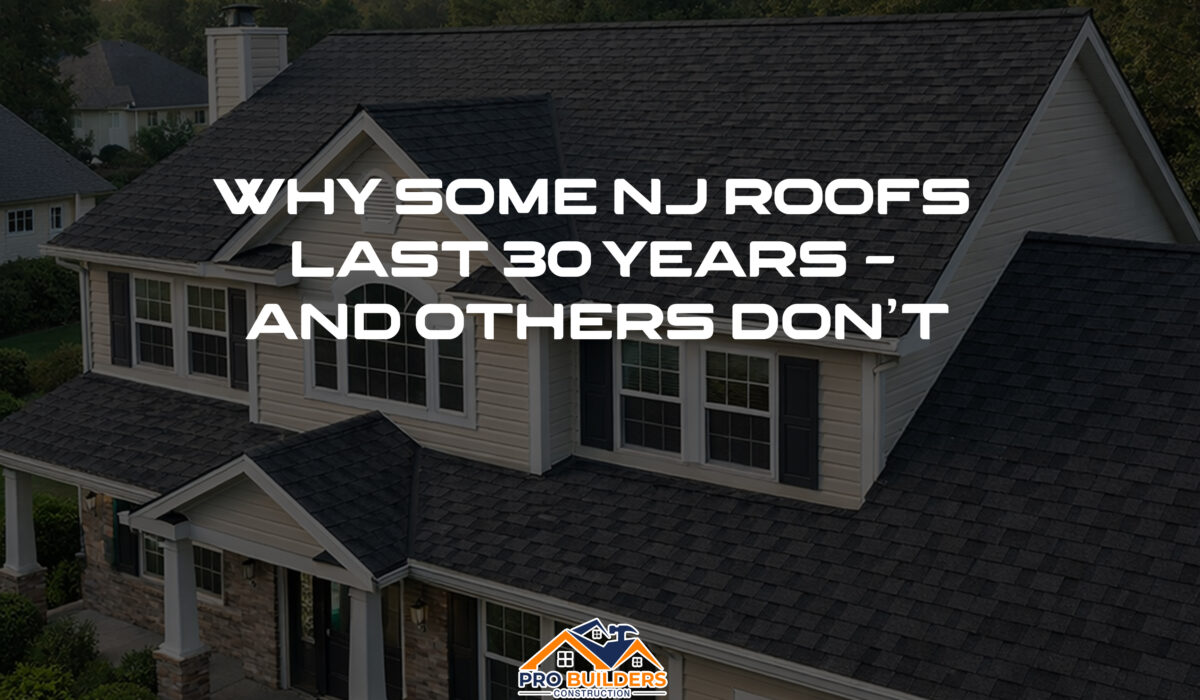
The Real Lifespan of a Roof in New Jersey
If you ask five homeowners how long a roof should last, you’ll probably get five confident answers – all different. Some say 30 years, some say 50, and someone always has that one uncle whose roof “hasn’t been touched since 1987.”
The truth? In New Jersey, your roof’s lifespan depends on more than just the material. It depends on weather, installation quality, ventilation, maintenance, and yes – how long you ignore small problems hoping they’ll magically fix themselves.
Let’s talk about what really affects it.
The Average Lifespan of Common Roofing Materials
Most homes in New Jersey have asphalt shingles. Standard 3-tab shingles usually last around 20–25 years. Architectural shingles can stretch closer to 30 years, sometimes longer if they’re installed correctly and maintained consistently.
Metal roofs can last 40–70 years. Slate and tile can last even longer – though they’re less common in typical NJ neighborhoods and come with a higher upfront cost.
But here’s the part many homeowners don’t factor in: those lifespan numbers assume ideal conditions. New Jersey is not exactly “ideal conditions.”
Why New Jersey Weather Speeds Things Up
Between heavy snow, coastal storms, humid summers, and constant freeze-thaw cycles, your roof works overtime.
Winter alone can shave years off a roof that isn’t maintained properly. Ice buildup along the edges traps water, forces it under shingles, and slowly damages the decking underneath. That’s why homeowners who end up dealing with ice dam problems during harsh New Jersey winters often discover damage that’s been building for seasons.
Summer doesn’t give your roof a break either. UV exposure dries out shingles. High attic temperatures accelerate aging. Poor airflow quietly shortens a roof’s lifespan without any dramatic warning signs.
Which brings us to something many people underestimate.
Ventilation: The Part Nobody Sees but Everyone Depends On
A roof can be made of premium shingles and still fail early if ventilation is wrong.
Heat trapped in the attic essentially cooks the shingles from underneath. Moisture buildup leads to mold, warped decking, and structural deterioration. If you’ve ever seen two homes built the same year with roofs aging at completely different speeds, ventilation is often the reason.
Roof longevity often comes down to proper airflow, especially when choosing the right ventilation system for your attic.
It’s not flashy, but it matters more than most homeowners realize.
Installation Quality Changes the Timeline
Even the best materials won’t compensate for shortcuts during installation.
Improper flashing, poorly sealed penetrations, weak nail patterns – these issues don’t always show up immediately. But over time, they reduce your roof’s expected lifespan significantly.
A roof isn’t just shingles. It’s decking, underlayment, flashing, ventilation, and structural support working together as one system. When one piece is compromised, the aging process speeds up.
Maintenance Is What Separates 20 Years from 30
Here’s the honest truth: most roofs don’t fail because they “expire.” They fail because small issues were ignored for years.
Loose shingles after a storm. Minor flashing separation. Clogged gutters pushing water back under the edge. These problems don’t feel urgent – until they are.
Homeowners who schedule regular inspections often avoid major structural repairs because they catch issues early. Waiting too long usually leads to the costly consequences of putting off roof repairs, and by that point, replacement becomes unavoidable.
Maintenance doesn’t just protect your roof. It protects your timeline.
So When Is It Actually Time to Replace It?
If your asphalt roof is 20+ years old in New Jersey, it’s smart to start evaluating it – even if everything looks fine from the ground.
Curling shingles, granule loss, soft spots, interior ceiling stains, or frequent small repairs are signs your roof is nearing the end of its functional life.
That doesn’t mean panic. It means assess before you’re forced into a decision during the next winter storm.
Sometimes a targeted repair extends the lifespan. Sometimes replacement is more cost-effective long-term. The key is making that decision proactively – not reactively.
Final Thoughts: Don’t Let a Leak Be the First Warning
Roofs in New Jersey don’t age gently. They endure. Snow, ice, humidity, wind – they absorb it all year after year.
If you’re unsure how much life your roof has left, guessing won’t help. A professional inspection gives you clarity. It tells you whether you have years remaining or whether it’s time to start planning ahead.
Pro Builders Construction helps homeowners across New Jersey understand the real condition of their roofs – without pressure and without unnecessary replacements. If your roof is aging or you’ve started noticing warning signs, schedule an inspection and get real answers before the next storm decides for you.
1 Comment
Comments are closed.