
Most people never look at the top of their chimney unless something has gone wrong. Maybe there’s a drip in the fireplace after a heavy rain, a strange scratching sound coming from the flue, or a pile of twigs that seems to appear out of nowhere every spring. In a lot of those cases, the problem starts with one small part sitting on top of the chimney: the chimney cap, or the lack of one.
A chimney cap doesn’t get much attention, but it does a surprising amount of work for its size. Here’s what it actually does, why it matters for New Jersey homes, and how to tell when yours needs to be replaced.
What Is a Chimney Cap?
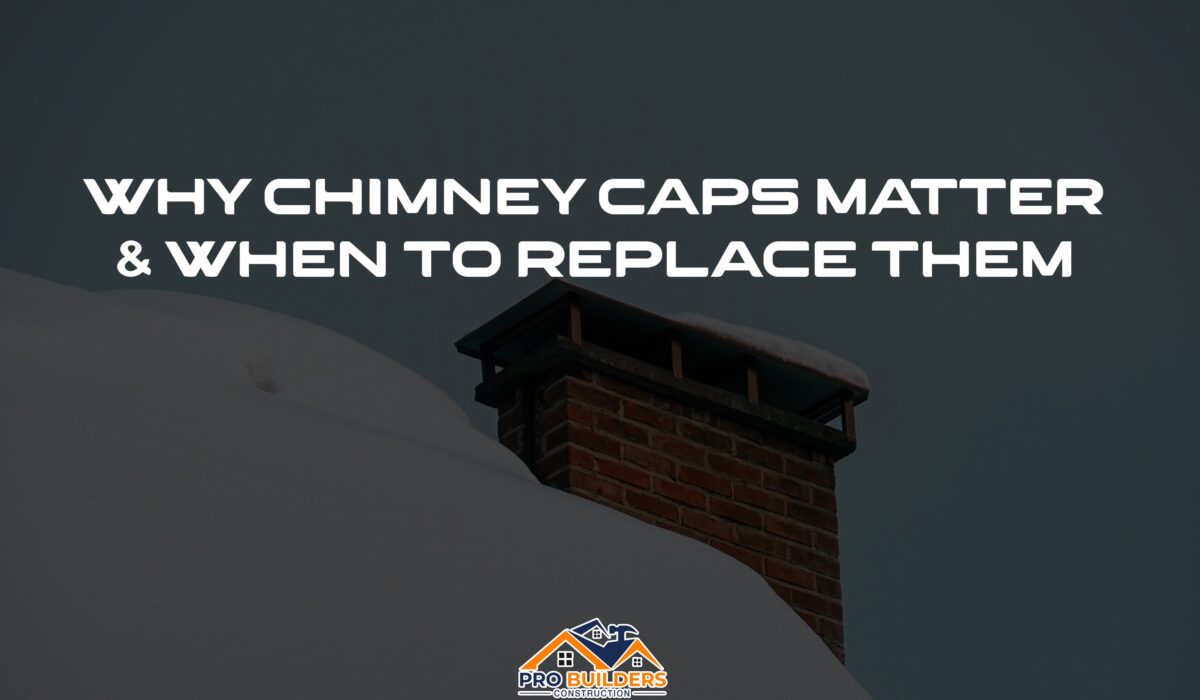
A chimney cap is the covering that sits over the top of the flue. Most have a solid metal top that works like a small roof, with wire mesh around the sides. The top keeps rain and snow from falling straight down the chimney, and the mesh keeps animals and debris out while still letting smoke escape.
It’s easy to confuse the cap with the chimney crown, but they’re two different things. The crown is the concrete or mortar slab that covers the top of the masonry around the flue. The cap sits on top of the flue opening itself. Both protect the chimney from water, and when either one fails, moisture finds its way inside.
What a Chimney Cap Actually Does
It keeps water out of the flue
An uncapped chimney is basically a large open pipe pointed at the sky. Rain and melting snow fall straight in and run down the inside of the flue. Over time, that water can rust the damper, damage the flue liner and wear away the mortar inside the chimney. Sometimes it shows up as stains or dampness around the fireplace. Often it does its damage quietly for years before anyone notices, and chimney water is one of the more common culprits when homeowners go looking for the source of a roof leak.
It keeps animals from moving in
To a bird, squirrel or raccoon, an open chimney looks like a warm, sheltered place to nest. The mesh on a chimney cap blocks the entrance. That matters for more than the noise. Nests and debris can block the flue, and a blocked flue can keep smoke and exhaust gases from venting the way they should.
It catches sparks
When you burn wood, small embers can rise up the chimney. The mesh on a cap acts as a spark arrestor, catching many of those embers before they can land on your roof, gutters or nearby trees. It isn’t a substitute for a clean, well-maintained chimney, but it’s a useful extra layer of protection.
It keeps leaves and debris out
Leaves, twigs and other debris can blow into an open chimney, especially in fall. A cap keeps most of it out, which helps the flue stay clear between cleanings.
Signs Your Chimney Cap Needs to Be Replaced
Chimney caps sit in the worst spot on the house: the highest point, exposed to every storm, freeze and windy day. Eventually they wear out. Here are the signs that yours may need attention.
Rust or corrosion. Caps made of galvanized steel tend to rust sooner than stainless steel or copper. A little surface discoloration isn’t an emergency, but rust that’s eating through the metal means the cap is on its way out.
Bent, loose or missing pieces. Strong winds, heavy snow and falling branches can knock a cap out of shape or loosen it from the flue. After a big storm, it’s worth checking from the ground that your cap is still there and still sitting straight.
Torn or clogged mesh. A hole in the mesh is an open door for animals. Mesh that’s clogged with soot or creosote is a different problem: it can restrict airflow, and creosote buildup is a sign the chimney needs attention too. Knowing how often to have your chimney cleaned helps keep both the flue and the cap in working order.
Water or animals getting in. If you notice moisture around the fireplace, a musty smell from the flue, or sounds of animals in the chimney, the cap may no longer be doing its job, or there may not be one at all.
Should You Replace It Yourself?
On paper, a chimney cap is a simple part. In practice, replacing one means climbing onto the roof and working at its highest point, often on a steep slope. That’s a risky job for most homeowners, especially in late fall when shingles can be wet or icy.
There’s also the question of fit. Caps come in different sizes and styles, including single-flue caps and larger caps that cover multiple flues. A cap that’s the wrong size or isn’t secured properly can blow off in the next storm. And while someone is up there, it’s smart to look at the crown, flashing and masonry too, since a damaged cap often isn’t the only problem at the top of the chimney.
Why Now Is a Good Time to Check
Before you light your first fire of the season is the right time to make sure the top of your chimney is in good shape. Winter brings snow, ice and freeze-thaw cycles that are hard on a chimney that’s already letting water in. If you’re working through a list of other fall tasks, the winter chimney prep steps that matter most all start at the top.
Final Thoughts
A chimney cap is a small part with a big job: keeping water, animals, sparks and debris out of your chimney. When it rusts, bends, tears or goes missing, the damage it was preventing starts quietly adding up inside the flue and the masonry. If your cap looks worn, you’ve noticed water around the fireplace, or you’re not sure whether your chimney has a cap at all, Pro Builders Construction can take a look and handle the chimney repair before winter settles in. Call us at 201-953-1557 or request your free estimate.